Evangelion in Hakone: a trip through Tokyo-3
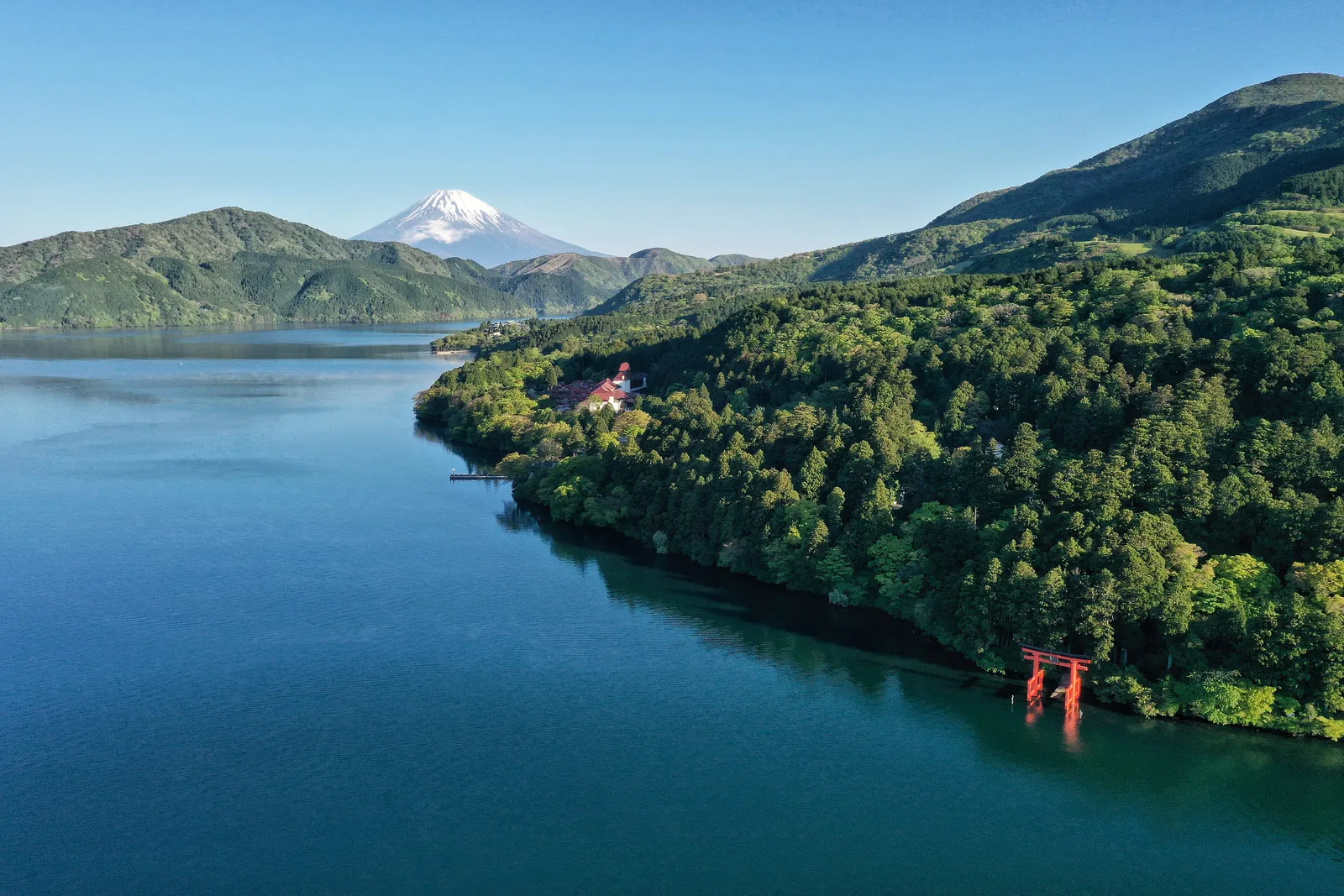
Hakone is the real landscape behind Tokyo-3. See it in a day from Shinjuku, or stay one night and add Hakone Shrine.
Links to Klook are affiliate links: if you buy through one, we may earn a commission at no extra cost to you.
In Evangelion, Tokyo-3 is a fortress city in the mountains of Hakone. The real Hakone is a hot-spring resort you cross by bus, ropeway and boat.
Evangelion’s official site and Hakone Navi, the guide run by the Odakyu group, both present Hakone as the setting of Tokyo-3. Some of its places are named by the series itself; others are where fans and pilgrimage guides agree. Getting around is part of the trip: the ropeway drops from the volcanic valley at Owakudani to Lake Ashi, and a pirate ship takes you across the water where Operation Yashima is fought.
The places, and what happens there
The numbers match the map. We say which places the series names itself and which ones fans have matched to the anime.
- Train and cable car
- Bus
- Ropeway
- Pirate ship
- Place from the series
- Station or pier
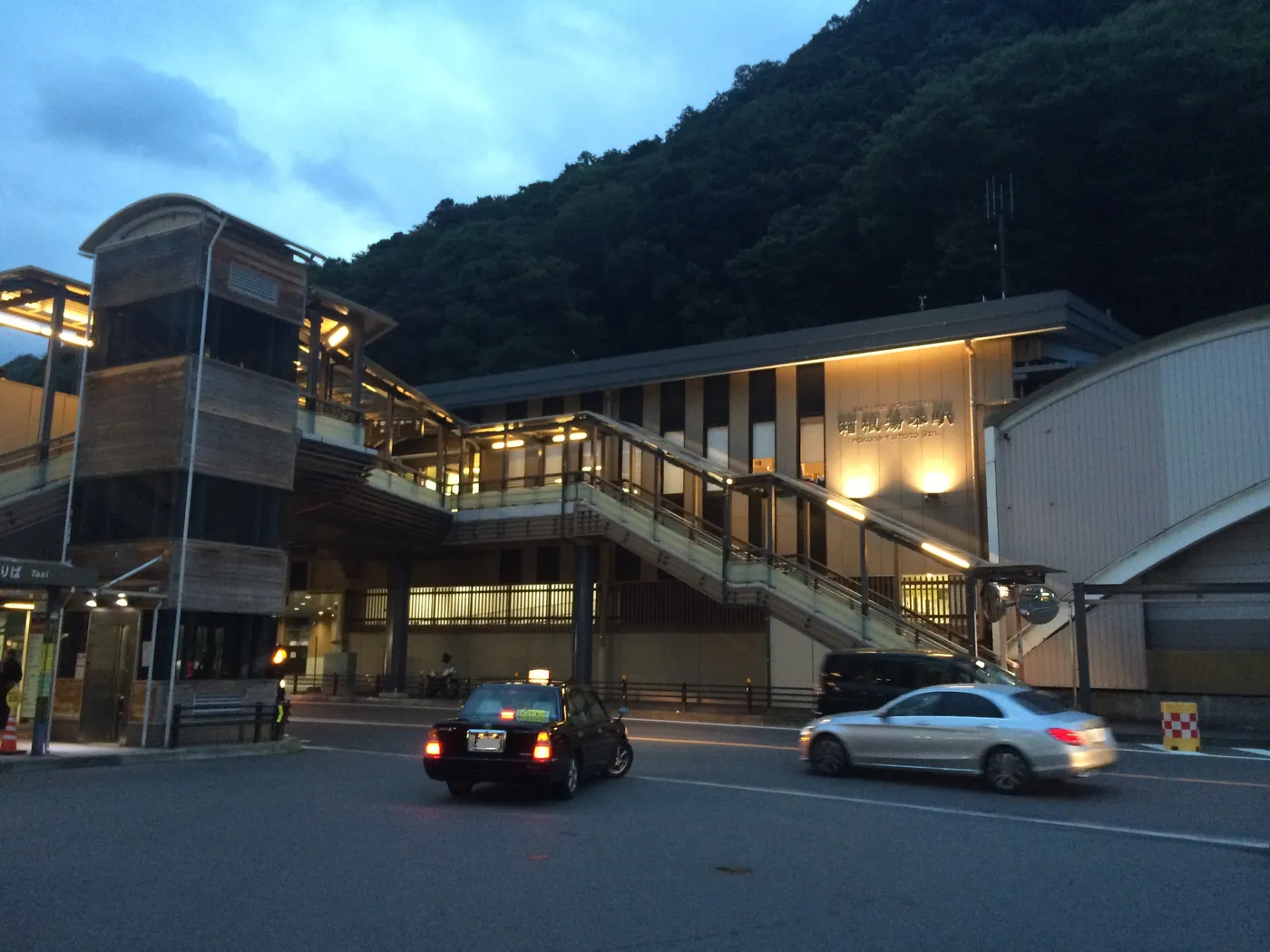
Hakone-Yumoto Station after its 2009 rebuild. Episode 4, the ending
Hakone-Yumoto Station
Shinji is meant to leave Tokyo-3 by train but stays on the platform. Misato arrives late, and the two say “I’m home” and “Welcome home”. Pilgrimage guides agree this is the station. It was rebuilt in 2009, so it no longer looks like the one in the anime.
Eva-ya, the official Evangelion shop, is on the ground floor of the station, open 9:00-18:00 and closed on irregular days.
Day trip1 night / 2 days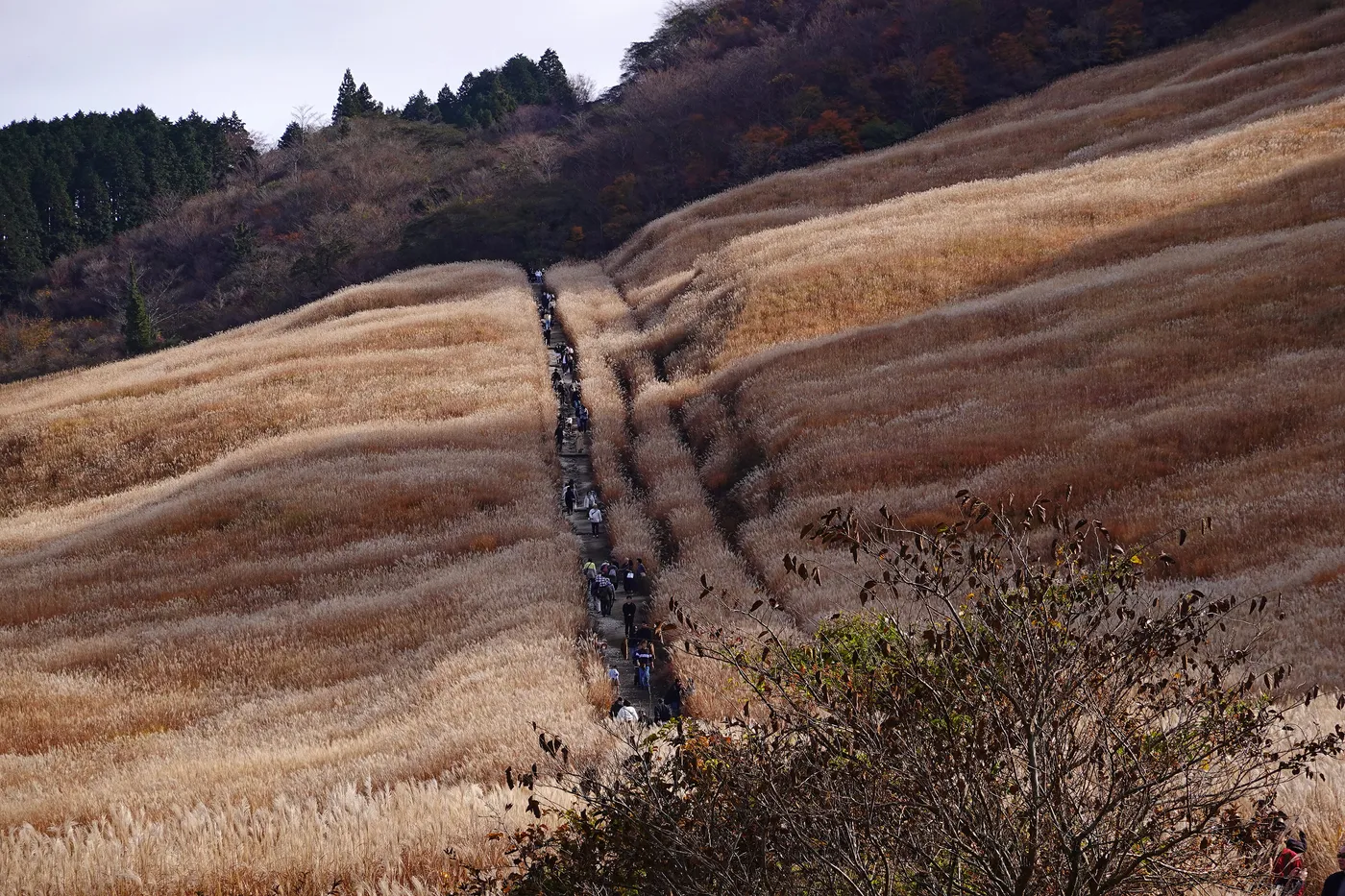
The susuki grass field in late November. The grass is at its most golden in October and November. NERV headquarters, and episode 4
Sengokuhara
Evangelion’s official site puts NERV headquarters and Shinji’s school in Sengokuhara, and names the former Sengokuhara Junior High as the model for the school. Fans link the susuki grass field here to episode 4, where the runaway Shinji comes across Kensuke playing soldier on his own. The grass field is not the school.
Day trip1 night / 2 days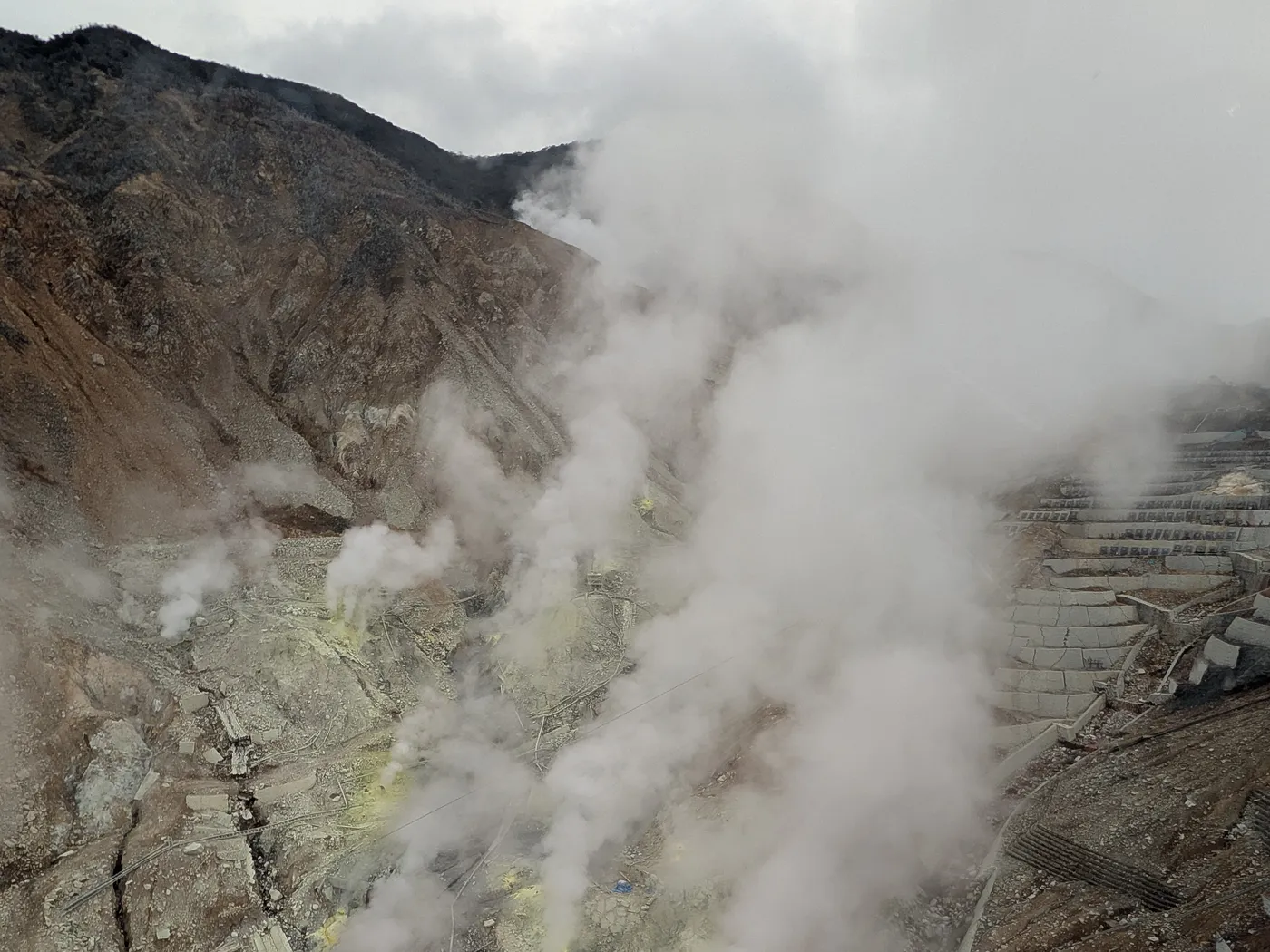
Steam vents at Owakudani. Episode 4
Owakudani
Pilgrimage guides and fans place Shinji in this steaming volcanic valley in episode 4, wandering after he runs away. Our plans stay around the ropeway station and its viewing area, where you also have lunch.
Day trip1 night / 2 days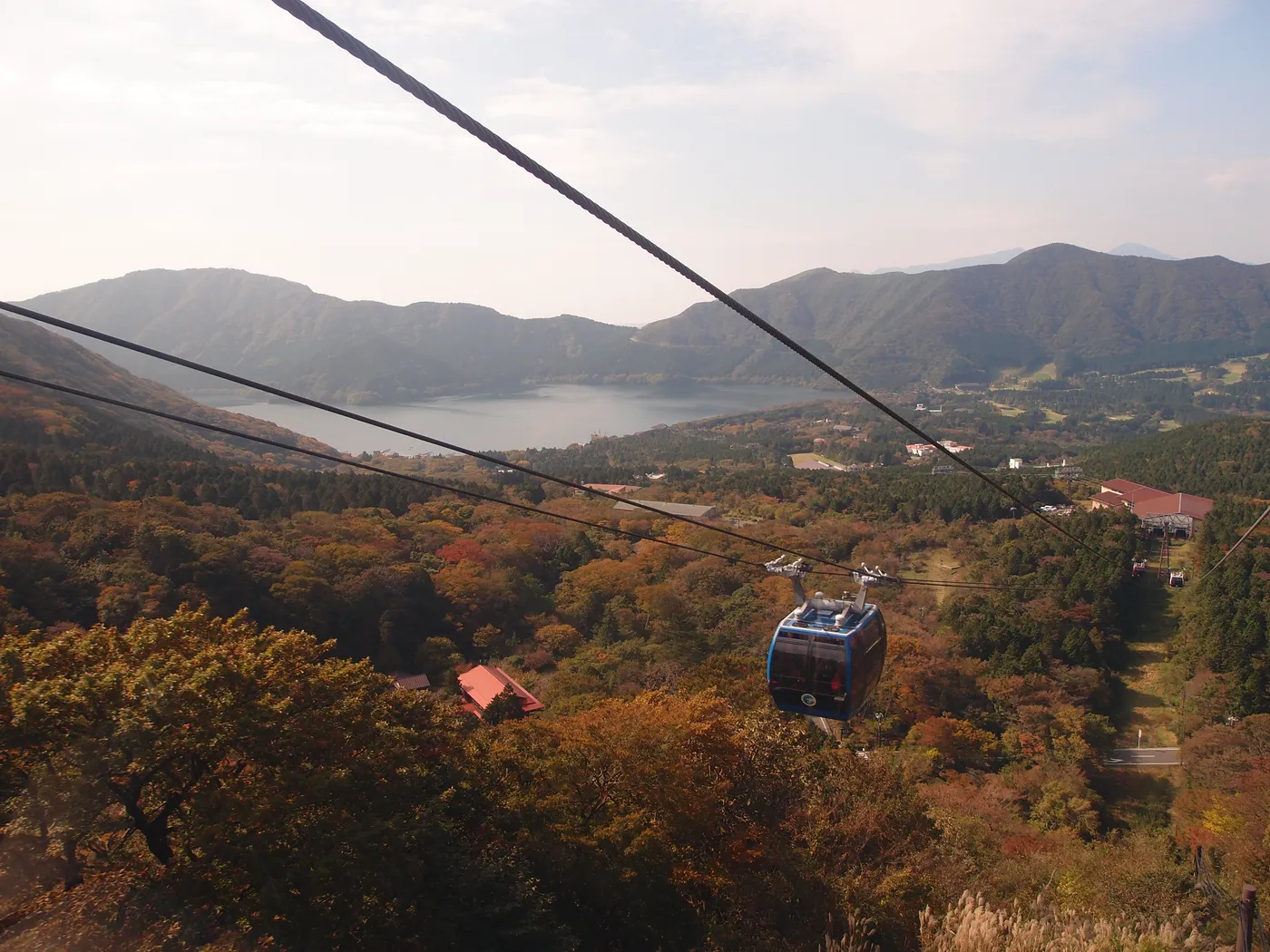
A gondola on its way down towards Lake Ashi. Tokyo-3 from above
The ropeway down to Togendai
From Owakudani the gondola drops towards Lake Ashi, with the lake, the pirate ships and the ring of mountains below you. No other ride shows as clearly how the valley fits together. When we rode it in 2012, it felt like being lowered into the Geofront.
Day trip1 night / 2 days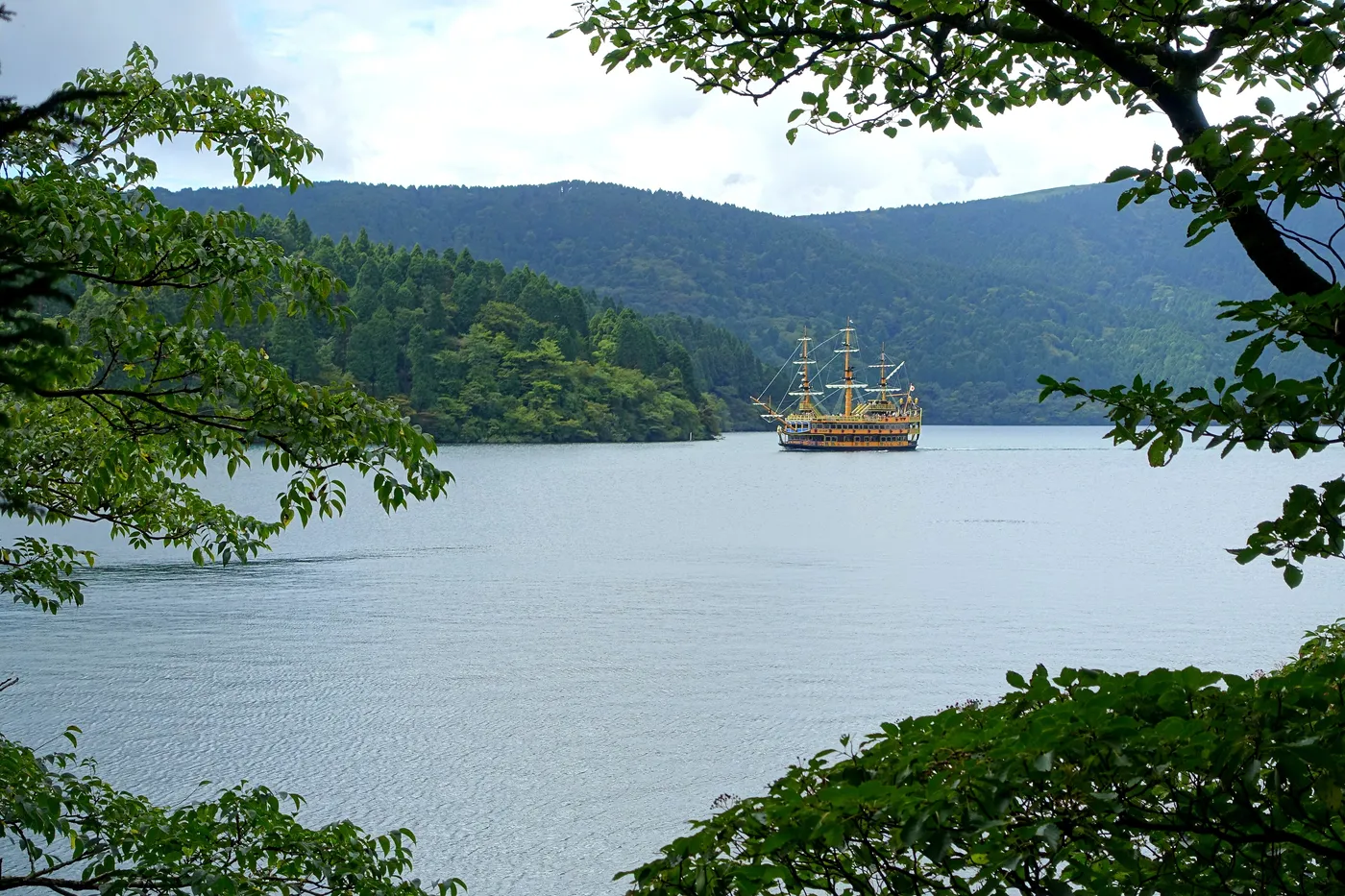
A pirate ship on Lake Ashi. Operation Yashima
Lake Ashi and Futagoyama
Evangelion’s official site names Futagoyama, the twin peaks east of Moto-Hakone, as the fortress Unit-01 fires from in Operation Yashima, and puts the lake in the middle of the battlefield. You do not climb it. Both plans look for it from the pirate ship, as the series’ own site did.
Day trip1 night / 2 daysEpisode 3 and Evangelion: 1.0
Kintoki Shrine and Hakone Shrine
Toji and Kensuke slip out of the shelter to watch Unit-01 fight. The scene is set at one shrine and looks like another, so there are two places to see.
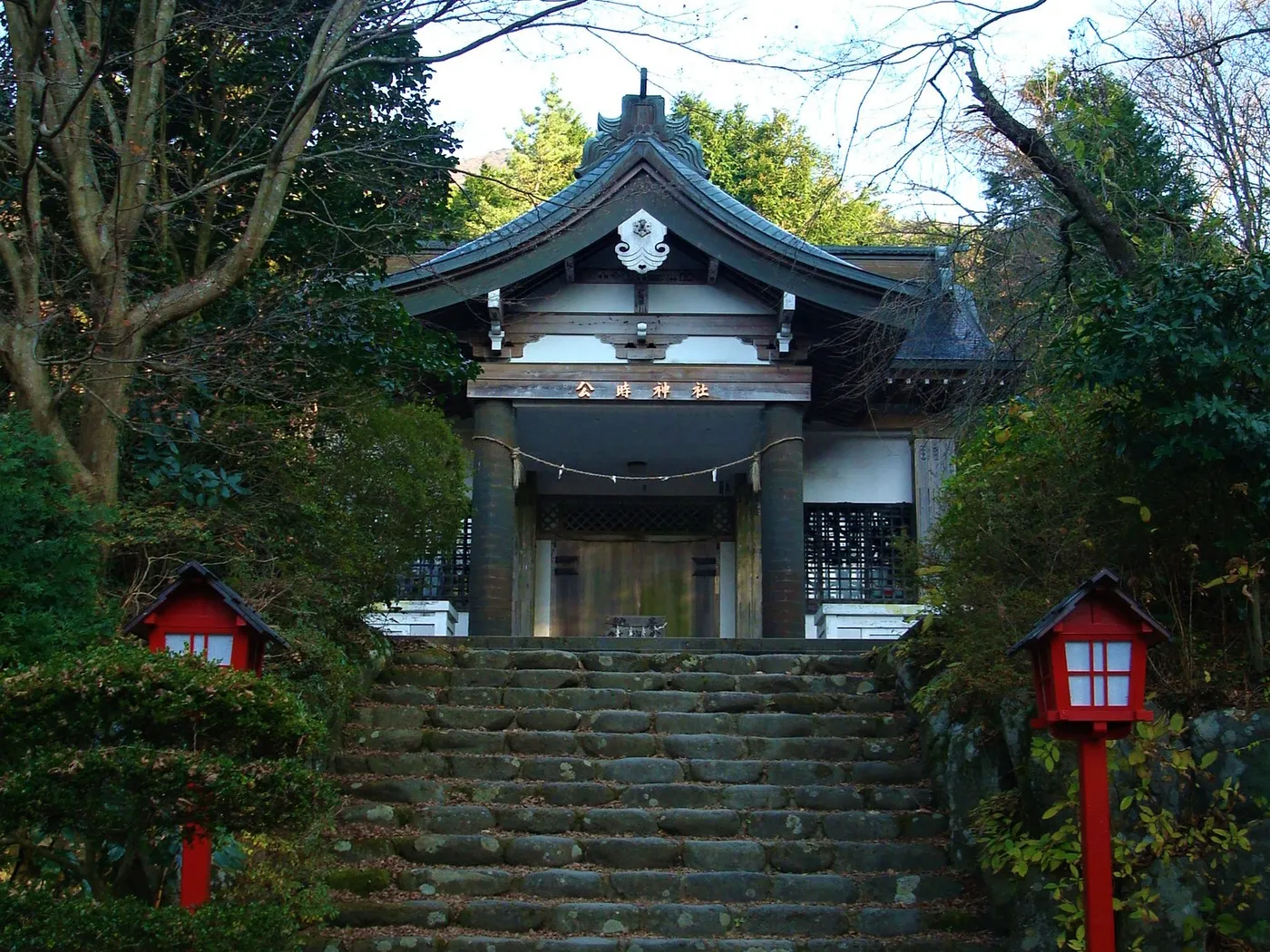
Where the story puts it
Kintoki Shrine, Sengokuhara
The shrine the boys run to is set here. The grounds and steps do not match the anime closely.
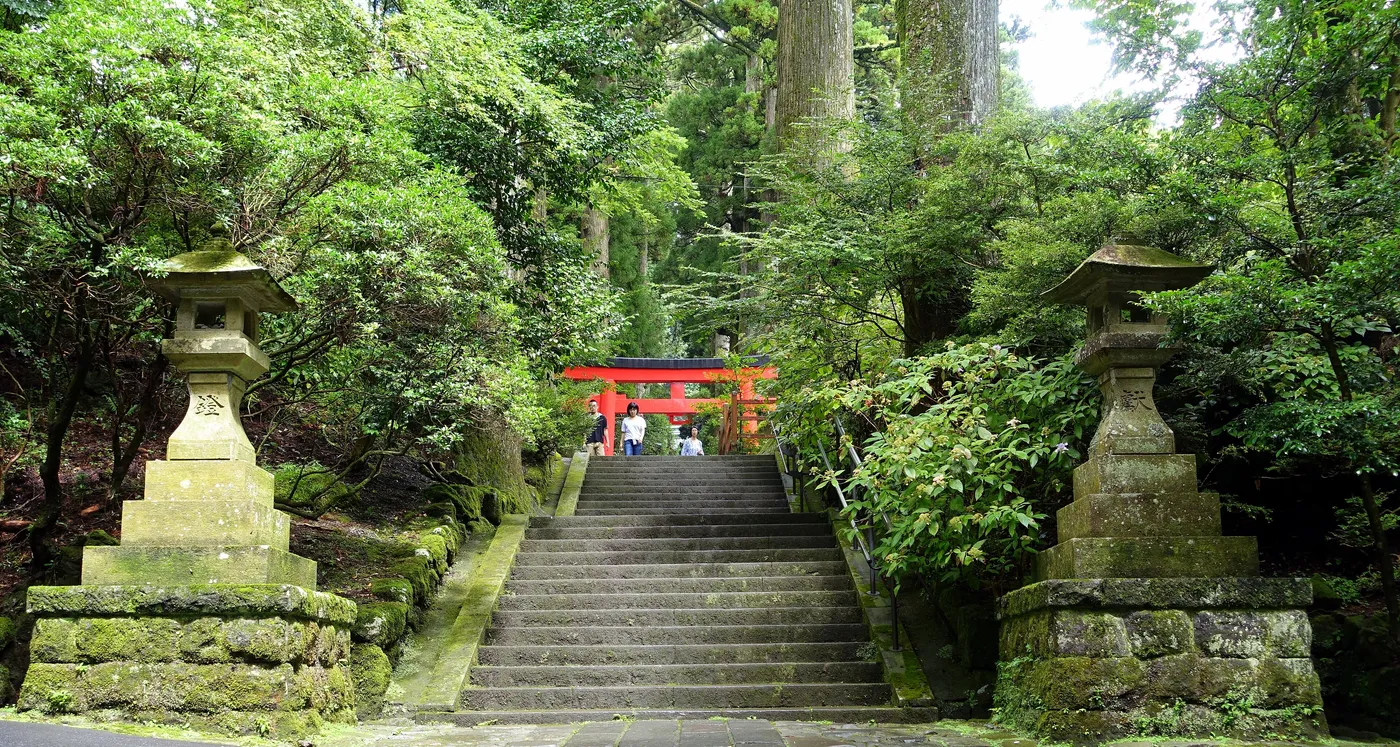
What the scene looks like
Hakone Shrine, Moto-Hakone
The long stone steps and the shrine the boys climb look like Hakone Shrine, on the shore of Lake Ashi.
In Kintoki Park, also in Sengokuhara, Hakone Town built a public toilet in 2020 to look like NERV’s “Sengokuhara Outpost”.
Hakone Shrine: 1 night / 2 days
One day or one night?
Both plans start and end at Shinjuku on the Romancecar and use the same Hakone Freepass. The difference is how much you can see without rushing.
1 day
The main scenes in one loop
Hakone-Yumoto, Sengokuhara, Owakudani, the ropeway and the pirate ship, back in Shinjuku at 19:45 at weekends. Hakone Shrine does not fit.
2 days, 1 night
The ropeway and the lake on separate days
Day 1 comes down from Owakudani to Sengokuhara. Day 2 crosses the lake for Operation Yashima and climbs the steps at Hakone Shrine.
Before you go
Both plans need the same few things.
A Hakone Freepass from Shinjuku
¥7,100 for adults, valid for 2 days. It covers the Odakyu line from Shinjuku and back and the buses, ropeway and pirate ship on both plans. There is no 1-day version, but it still costs less than separate fares on the day trip. Klook does not sell it to holders of Japanese passports. Buy the Hakone Freepass on Klook
A Romancecar seat each way
The Freepass does not cover the limited express charge. Every Romancecar seat is reserved, ¥1,150 each way for a ticketless seat. Reserve on Klook: Romancecar to Hakone and Romancecar back to Shinjuku
Your suitcase stays in Shinjuku
Both plans come back through Shinjuku, and you change between trains, buses, a ropeway and a boat. Leave large bags in Shinjuku and bring a day bag, or one night’s things. If you are not returning through Shinjuku, Hakone’s luggage service carries bags between Hakone-Yumoto Station and partner hotels. Where to leave your luggage
Mobile data and a charged phone
Keep mobile data available so you can open your e-tickets in Klook. You also need it to check the ropeway and the boat on the day. Get a Japan eSIM on Klook
The weather decides the ropeway and the boat
Strong wind, lightning and volcanic gas can stop the ropeway. Fog and strong wind can stop the pirate ship or change its route. Each plan has a version for when one of them is not running. Check today’s operating status on Hakone Navi
Practical guides
Tickets, hotels, food and luggage in more detail, for both trips.
- Transport and ticketsWhich Freepass to buy, the Romancecar seat, and every ride from the mountain railway to the pirate ship.
- Where to stayFive hotels between Sengokuhara and Lake Ashi, compared by the Day 2 boat, meals and payment.
- Where to eatLunch at Owakudani and Moto-Hakone, and what to do when the plan changes.
- LuggageLeave the case in Shinjuku, or send it to your hotel from Hakone-Yumoto.
Official links and check date
Official links for tickets, operating status and the places themselves. Check the details again for your travel date.
Last checked
- Train and bus times
- Facilities and fares
Photo credits (8)
These photos are from Wikimedia Commons and are used under the licences shown.
- “Lake Ashi & Mt Fuji & Hakone Shrine” by Charlie fong, CC BY-SA 4.0, via Wikimedia Commons. Resized and converted to WebP. This adapted version is also licensed under CC BY-SA 4.0.
- “A view of Owakudani and ropeway, Hakone, Japan” by Joli Rumi, CC BY-SA 4.0, via Wikimedia Commons. Cropped, resized and converted to WebP. This adapted version is also licensed under CC BY-SA 4.0.
- “Hakone Ropeway @ From Owakudani to Togendai” by Guilhem Vellut, CC BY 2.0, via Wikimedia Commons. Resized and converted to WebP.
- “251123 Sengokuhara Hakone Japan02s3” by 663highland, CC BY-SA 4.0, via Wikimedia Commons. Resized and converted to WebP. This adapted version is also licensed under CC BY-SA 4.0.
- “Stairs - Hakone-jinja - Hakone, Japan - DSC05716” by Daderot, CC0 1.0, via Wikimedia Commons. Cropped, resized and converted to WebP.
- “Hakone Pirate Ship - Hakone, Japan - DSC06056” by Daderot, CC0 1.0, via Wikimedia Commons. Resized and converted to WebP.
- “Hakone-yumoto” by 小田原 (Odawara), CC BY-SA 4.0, via Wikimedia Commons. Resized and converted to WebP. This adapted version is also licensed under CC BY-SA 4.0.
- “公時神社(金時神社)” by Koda6029, CC BY-SA 4.0, via Wikimedia Commons. Resized and converted to WebP. This adapted version is also licensed under CC BY-SA 4.0.